Camp
  • How To Get Into Bouldering

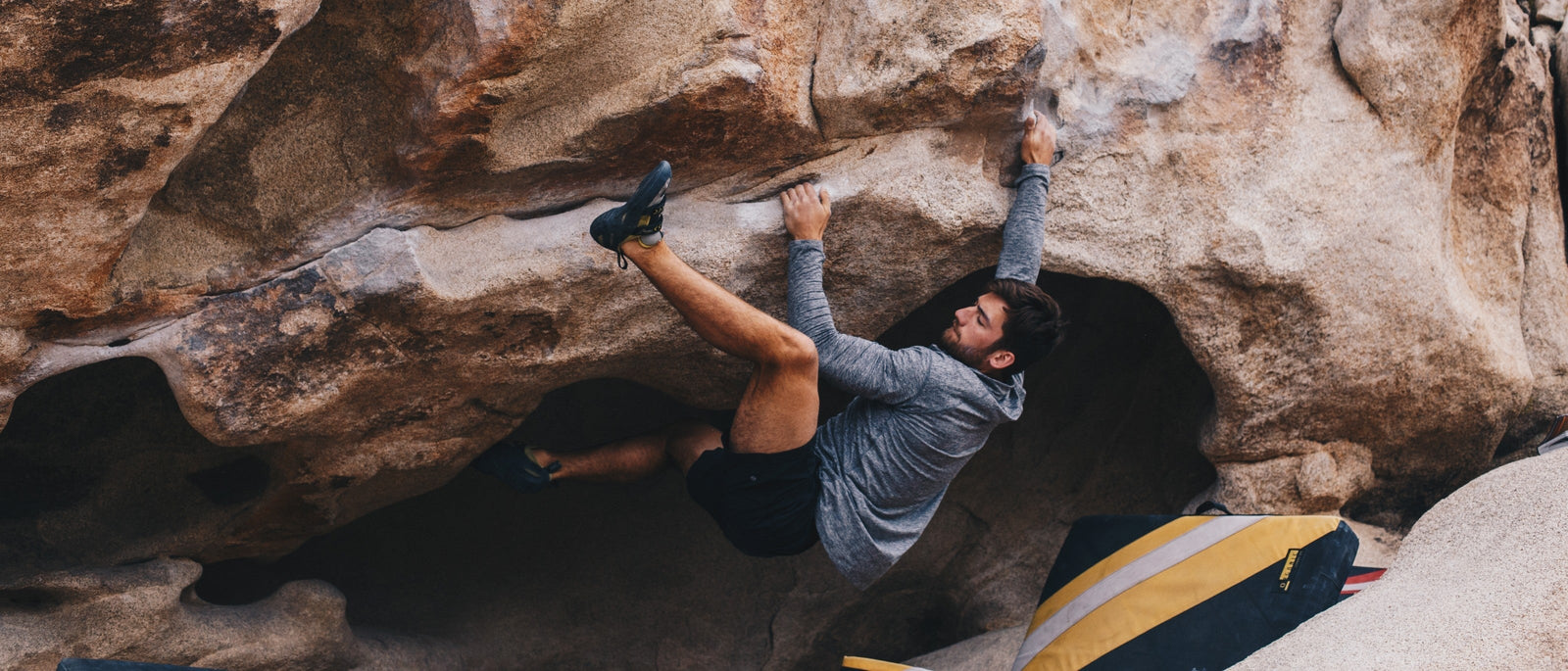
    From innovative indoor gyms to stunning outdoor rockfaces, bouldering isn't just great fitness – it's a passion and lifestyle for climbers across the world. Here's how to get involved.

    How To Get Into Bouldering

    Updated 26th March 2025 | Words by Matt Jones @ WildBounds HQ


    If you’ve ever shaken hands with a rock climber, you might assume that bouldering is pretty hardcore – and it can be. But the great thing about bouldering is that it can be as challenging or sociable as you want, and even the best climbers go bouldering for the sheer fun of it rather than to train.

    “It’s super simple, time-friendly and very social.” That’s the verdict given by top UK rock climber Steve McClure, and it hits the nail on the head. Bouldering is the most accessible variant of climbing, purely because the amount of kit you need is minimal and it’s easily scaled up or down for difficulty. We reckon it’s something that everyone should try at least once, which is why we’ve outlined, right here, everything that you need to get started.

    Bouldering vs Climbing

    If you’ve never encountered bouldering before, chances are you’re not up to speed on how exactly it differs from regular climbing – so we asked McClure to spell it out. “In a nutshell, it’s basically that bouldering is climbing without the use of equipment other than a chalk bag and a pair of shoes”. That’s why it’s the easiest form of climbing to get into – you don’t need to learn about belaying, abseiling or anything too technical. Aside from basic wall safety, all you need to do is just rock up, put your shoes on and climb: simple.

    Hanging out at the climbing gym

    Bouldering Kit

    No prizes for guessing what’s needed here. As listed by McClure, chalk and some shoes are all you’re going to need for indoor bouldering – although when you take it outdoors, a crash mat is definitely advised too. Most bouldering gyms will provide kit that you can rent, which is ideal if you’re just getting a feel for the sport.

    In terms of added extras, a chalk bag is a useful accessory. These are easily picked up online though, and all you need beyond that is some comfortable, loose fitting clothes to allow a full range of movement. Of course, if you want to look the part in PrAna’s slick apparel or Gramicci's iconic pants and shorts, we’d completely understand. We’ve also covered this in more detail in our bouldering essentials article, so take a look at that if you want more info on all the gear you might need.

    Bouldering outdoors in a pine forest

    Indoors vs Outdoors

    For most of us, an indoor bouldering gym is going to be your best option. Not only are they easier to get started with, with chunky grips for beginners and matted floors, indoor gyms are incredibly sociable atmospheres, packed full of likeminded people looking to challenge themselves in a fun way. Once you get started, there are myriad ways to test yourself, from increasing difficult problems (i.e. routes) to fingerboards. There are bouldering gyms across the entire country, too.

    Taking your new-found skills outdoors is big draw for most avid boulderers, though – it’s where McClure is most likely to be found. “The amount of times I’ve been out bouldering in the Peak District on a Saturday morning just because it’s so easy to do is incredible,” he says. It’s the idyllic view of bouldering: pitching up to a craggy buttress or rock-strewn forest with nothing but a crash mat, a couple of mates and a few spare hours ahead of you. Without the need for fixed ropes, you can pretty much take your bouldering anywhere there’s rock, from coastal boulders to inland limestone.

    Climber at the bouldering wall

    How to find a bouldering gym

    A quick Google search should reveal some of the top gyms in your area. Most cities in the UK have bouldering gyms popping up, partially because bouldering gyms can be a lot smaller than typical climbing gyms. Check out our comprehensive list of the best bouldering gyms around the UK.

    Bouldering Rules

    Climbing gyms will all have their own versions of rules, and when you first set foot in a gym most will do a good job of explaining those to you. That said there are a few common rules you should follow:

    1. Bouldering problems have start holds, indicated by a small tag on a specific hold. Proper rules state that you should start with hands (and sometimes corresponding feet holds) on the start holds.
    2. At the end, or top, of a bouldering route will be finish holds. To complete a route you must touch the last hold with both hands.
    3. Be aware of the fall zone. As you walk around a bouldering gym, you always need to be aware of people climbing, as they could potentially fall. Never walk under someone or past someone if it brings you into their fall zone.
    4. Leave no trace. This of course applies to anything you do outdoors, and bouldering is no different. Make sure the boulder looks exactly like it did when you arrived.
    5. Have fun! As with all sports and hobbies it’s just about having fun. Drag friends along, smile at people in the gym, and just generally bring good vibes.

    How To Get Into Bouldering


    Also in Camp Notes

    A man and a woman lying on sleeping mats and bags on an open hillside, with a dramatic mountain cliff and wide alpine valley behind them, sharing a hot drink from a camping stove.
    The Ultimate Guide to Sleeping Mats and Pads

    Comfort, warmth, durability, weight and bulk: there’s a lot to consider when choosing the right sleeping mat. Whether you’re buying your first pad or upgrading a well-worn setup, here’s everything you need to know.

    Camping Gas Explained | Camp Notes | WildBounds UK
    Camping Gas Explained

    Which gas is best for camping and backpacking? Which gas canisters will work with my stove? And how long will a canister last? All your burning questions about camping gas answered…

    Inserting a NEMO Airpin – an evolution of the tried and tested needle stake design – into stony ground.
    Tent Pegs & Stakes: The Ultimate Guide to Types & Uses

    Which tent pegs are best for backpacking and wild camping? We highlight top designs for varying ground types to ensure a secure pitch every time.