
Chicken of the Woods is a brightly coloured edible fungi found on hardwood trees such as oak, cherry and sweet chestnut. With no poisonous lookalikes, it is considered a safe mushroom for beginner foragers*. It has a delicious, chicken-like texture when young, which means it is very sought-after and well worth a summertime visit to the woods.
*Disclaimer: Always be 100% sure of what you have picked before you eat it. Around 1 in 25 people might be allergic to chicken of the woods – it can cause swelling of the lips and gastric upset. Try a small piece of the mushroom first and wait 24 hours before making a large meal with it.

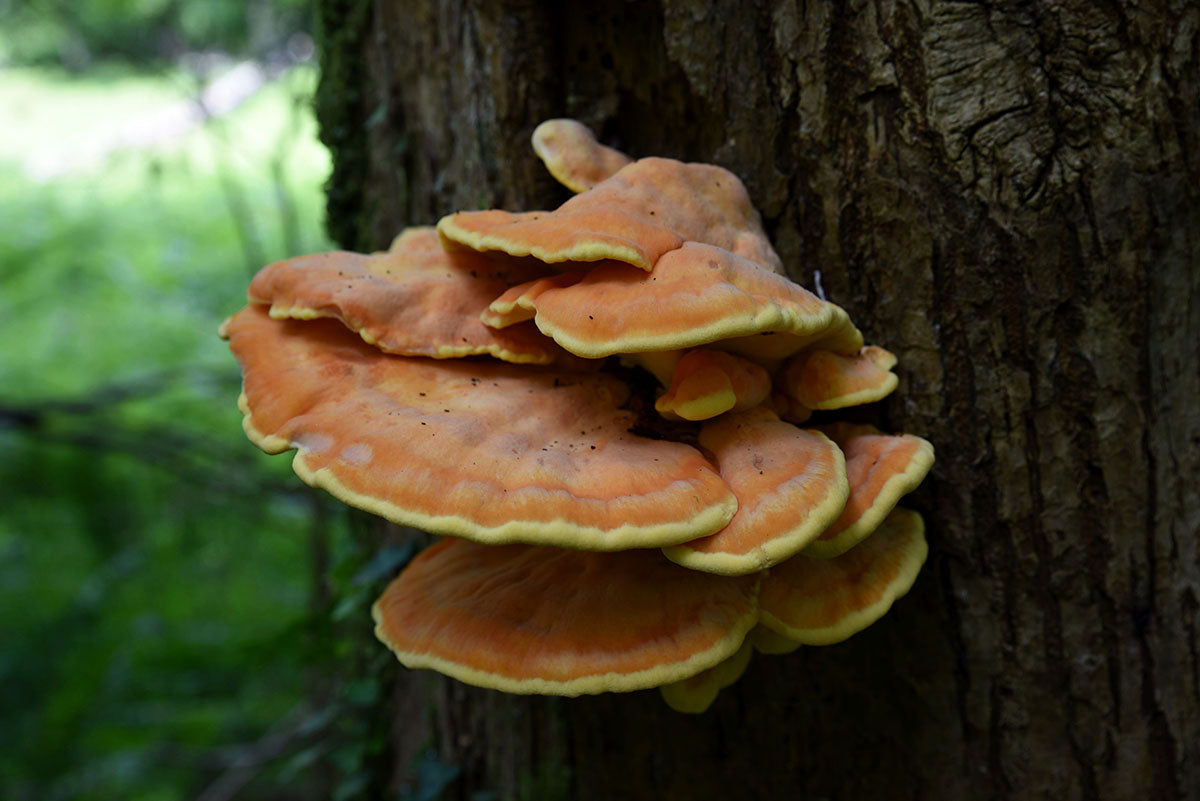
Chicken of the Woods (Laetiporus Sulphureus) is a very distinctive-looking mushroom. This means it has no real lookalikes or confusion species. When very young, Chicken of the Woods forms round yellow bumps, giving the appearance that the tree has been sprayed with expanding foam. It should never be picked at this stage – instead wait at least two to three days as the mushroom starts to grow more distinctive shelf-like structures, resembling a cluster of brightly coloured Cornish pasties.
The cap or top of the fungi is often a creamy or sulphur yellow along its outer ridge, moving to a banded yellow or orange at the centre. The underside is a vivid bright yellow, especially on younger specimens. As it ages, the top and the underside of the fungi can fade to a creamier yellow colour. By this point it is starting to get tough and is no longer worth picking.
If you look on the underside you will notice lots of sponge-like pores rather than gills. The bright sulphur yellow colour and the pores on the underside give the mushroom its Latin name of Laetiporus Sulphureus (‘Sulphur Polypore’). These two details are key identifiers which separate the mushroom from most other lookalikes. The only mushroom it can resemble, especially in its early stages, is the Black Staining Polypore. However, greys and browns dominate on the cap of the Black Staining Polypore much more than yellows and oranges. As the name suggests, that mushroom also stains black when cut. But as both mushrooms are edible anyway, there is no great alarm if you mix up the two.

Chicken of the Woods can be found as early as April and as late as October but it tends to be more of a summer mushroom. As such you’ll more often find it between June and August. It likes to grow on hardwood trees, such as oak, cherry and chestnut and will hollow out the heartwood of these trees, leaving the living, outer rings untouched. Chicken of the Woods is also commonly found on yew trees. There is much debate whether or not you should eat any fungi found growing on a yew tree, as it is widely thought they can absorb the yew’s poisonous taxine alkaloids. Some have eaten chicken of the woods from a yew and lived to tell the tale. The trouble is that polypore fungi grow very quickly, engulfing any plant matter in their way. Without watching the mushroom grow in real time, it is impossible to know if it has absorbed any loose needles, twigs or other plant matter from its host tree as it spread out from the trunk. Therefore, it is best to stick to the advice of the majority of textbooks and avoid any fungi found on a yew tree.

The clue to the flavour and texture of Chicken of the Woods is in its name; it tastes exactly like chicken and can be cooked in much the same way. As it tends to dry out, many people fry it in butter and add a little stock or wine. But my favourite thing to do with this versatile mushroom is to make a Thai-style stir fry or curry. The mushroom soaks up the coconut milk whilst taking on the South-East Asian flavours of Kaffir lime, lemongrass and coriander. You can also coat your strips of Chicken of the Woods with a good splash of soy sauce before you fry it, so it soaks up rich umami flavours.

![]() |
![]() |