
SAME DAY SHIPPING | FREE UK RETURNS | EU & INT'L SHIPPING

SAME DAY SHIPPING | FREE RETURNS

Field Guide: Jersey, Channel Islands
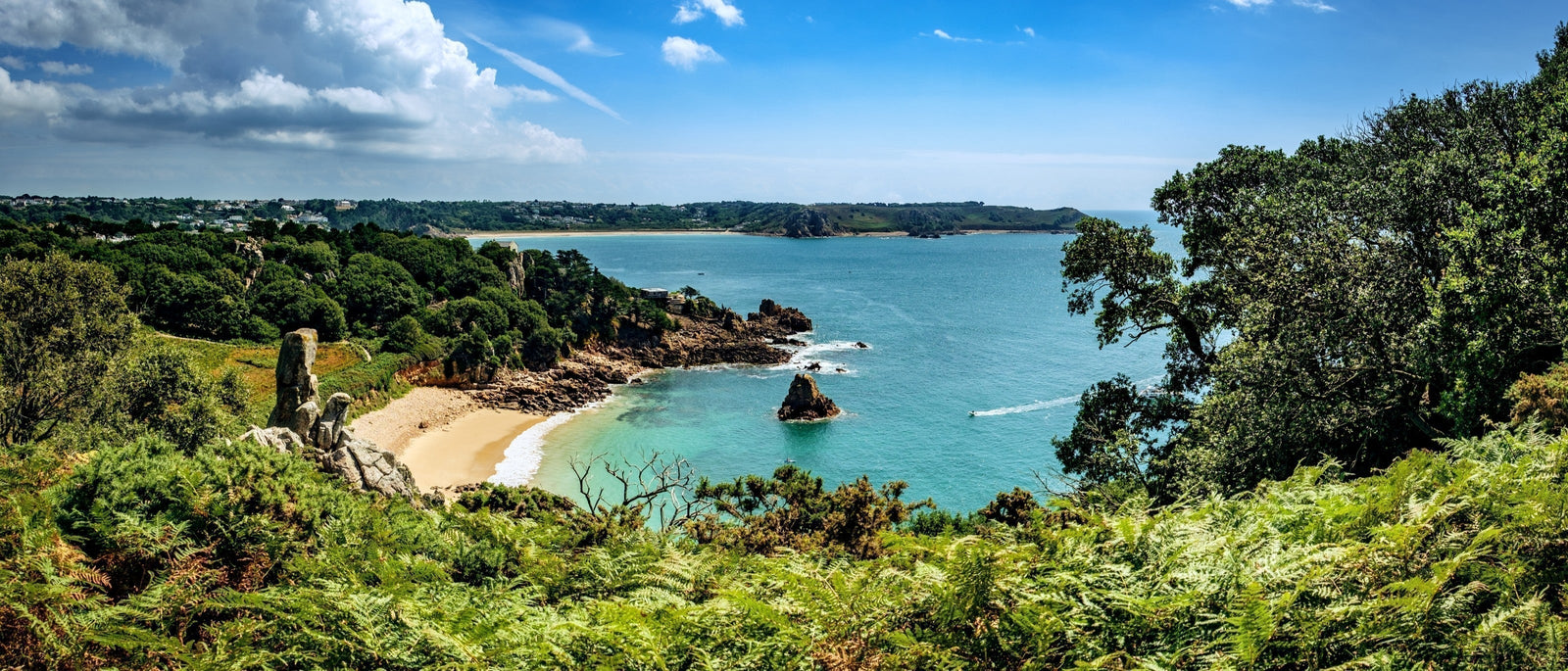
Balanced between Britain and France and shaped by tides, language and centuries of history, Jersey boasts unique castles and beaches, plus plentiful surf spots and coastal paths.

15th December 2025 | Words by Ed Cooper | Photos as credited

Jersey is the largest and arguably most charming of the four main Channel Islands (no offence to neighbouring Guernsey). It occupies a wonderfully ambiguous position on the map, both geographically and culturally. Sitting in the English Channel just 14km (nine miles) from the Normandy coast, the island is emphatically closer to France than to Britain; London lies around 160km (100 miles) away. On a clear day, you can see the French shoreline from Jersey’s eastern cliffs, a reminder that this is a place shaped as much by continental Europe as it is by the British Isles. That sense of being slightly adrift from the mainland is central to Jersey’s appeal: close enough to everywhere, yet resolutely its own thing.

This in-between identity runs deep and can be witnessed across the island, but its unique language perhaps sums it up best. That’s because, alongside English, Jersey has its own traditional tongue, Jèrriais, a Norman language with French roots that still survives mostly in street names but less so in local sayings and cultural life. While it’s no longer widely spoken day to day, its presence is keenly felt. A greeting such as “Bouônjour” (Good morning) or “À bétôt” (See you soon) hints at an older island rhythm and a heritage that refuses to be flattened by modern uniformity.

Union Jack and Jersey flag flying together against blue sky with white clouds

The Union Jack and Jersey flag flying side by side. Jersey is a British Crown Dependency – not part of the United Kingdom, but with the British monarch as head of state. This unique constitutional status means Jersey is self-governing with its own parliament, tax system, and laws. The Jersey flag features three lions – the arms of England – reflecting centuries of connection to the English Crown.


Jersey’s political status is similarly nuanced. It is not part of the UK, nor is it a colony, but a self-governing Crown Dependency. The island has its own parliament, the States Assembly, and makes its own laws on everything from taxation to healthcare. UK law does not automatically apply here, and many British policies simply stop at the water’s edge. At the same time, the British government is responsible for defence and foreign affairs, creating a carefully balanced arrangement that has evolved over centuries. It’s a system that suits Jersey well: fiercely independent yet securely connected.

In this field guide, you’ll find not just places to see and things to do in Jersey, but insights into how this remarkable island fits into the wider tapestry of history, language and topography that make it unlike anywhere else in the British Isles.

Historical sites

Across Jersey, there are centuries of history waiting to be discovered. From Neolithic graves that predate the pyramids to bunkers built during the Nazi Occupation and mighty castles to wild coastal viewpoints, there’s plenty of treasure waiting to be found. Most of the sights we’ve included will be under a 30-minute drive wherever you decide to stay on the island.

Mont Orgueil Castle on rocky hilltop above Gorey Harbour at golden hour with moored boats and moon visible in blue sky

Golden evening light bathes Mont Orgueil Castle and Gorey Harbour on Jersey's east coast. The medieval fortress, which dates back to the early 13th century, towers over the sheltered harbour where fishing boats and yachts lie at low tide.


Mont Orgueil Castle

Often referred to as ‘Gorey Castle’ by locals, Mont Orgueil has towered over Gorey, a small village on Jersey’s east coast, for over 800 years and, with an intricate network of staircases, towers and secret rooms, makes for one of the most complete examples of a medieval fortress. On a clear day, you’ll be able to see the coast of France from Mont Orgueil’s battlements. Inside, there are regular exhibits on a life once lived – including sessions on witchcraft and medieval diagnostic tools. With billowing flags above and a replica trebuchet on the grounds, the castle’s grounds offer excellent views of Gorey Bay.

Golden evening light bathes Mont Orgueil Castle and Gorey Harbour on Jersey's east coast. The medieval fortress, which dates back to the early 13th century, towers over the sheltered harbour where fishing boats and yachts lie at low tide.

La Hougue Bie, one of Jersey's most remarkable historical sites. The 16th-century chapel sits atop a 6,000-year-old Neolithic passage grave, one of the best-preserved burial mounds in Europe, creating a striking fusion of medieval and prehistoric architecture.


La Hougue Bie

Set on a gentle hill in the parish of St Saviour, La Hougue Bie is one of Jersey’s most remarkable and ancient sites, centred on a Neolithic passage grave more than 6,000 years old – older than both Stonehenge and the pyramids. A narrow stone corridor leads into the burial chamber, precisely aligned with the rising sun on the equinoxes, where light dramatically illuminates the interior. Above the mound sits a 16th-century chapel topped by a medieval tower, creating an evocative layering of sacred history. From the small summit, there are wide views across the island.

WWII German bunker on sandy beach at St Ouen's Bay with dramatic evening light and rocky outcrop in background, Jersey, Channel Islands

A German bunker from Jersey's World War II occupation stands sentinel on St Ouen's Bay. The concrete fortification, part of Hitler's Atlantic Wall defences, is bathed in golden evening light, a stark reminder of the Channel Islands' wartime history against the backdrop of Jersey's sweeping west coast.


Remnants of the Second World War

Scattered across Jersey are the unmistakable remains of the island’s World War II occupation, when it became part of Hitler’s Atlantic Wall and one of the most heavily fortified places in Europe. Concrete bunkers still stud the cliffs and beaches, some softened by time and imagination – repurposed as cafés, viewing points or small museums – while others remain stark reminders of a darker chapter. The most striking legacy lies beneath St Helier, where the Jersey War Tunnels, including the vast underground hospital carved out by forced labour, offer a chilling account of life under occupation, some 50 metres below ground. Elsewhere, gun batteries (be sure to visit Battery Lothringen, the only German naval batterie in Jersey), observation towers and defensive sea walls are woven into coastal walks and headlands.

Outdoor pursuits

Surfer riding green wave at Jersey with La Corbiere Lighthouse silhouetted on rocky outcrop in background

A surfer catches a wave, with the iconic La Corbiere Lighthouse standing sentinel on its rocky promontory. Jersey can offer surprisingly good surf conditions, particularly during autumn and winter swells.


Surfing

While Jersey may not have Cornwall’s fame, it quietly holds its own as one of the Channel Islands’ best surf spots. The island’s west coast faces the full force of Atlantic swells, and beaches such as St Ouen’s Bay deliver consistent waves that work across a wide range of conditions. Stretching for nearly five kilometres, St Ouen’s offers plenty of space, whether you’re a beginner wobbling to your feet or a seasoned surfer chasing cleaner peaks further along the sand. Surf schools operate year-round, offering lessons and board hire, while the laid-back beach cafés double as informal surf hubs. Water temperatures mean a wetsuit is essential.

Cycling

Ideal for cyclists, Jersey’s modest size means you’re never far from the coast, countryside or a restorative coffee stop. Quiet green lanes (known locally as “Green Roads”) criss-cross the interior, where speed limits drop to a gentle 15mph and cyclists have priority, making them ideal for meandering rides through leafy valleys and past granite farmhouses. For something more testing, coastal routes deliver punchy climbs and big rewards: the ascent from St Aubin to Corbiere or the undulating north-coast road past Rozel and Bonne Nuit offer sweeping sea views and bracing descents. Road cyclists will enjoy linking the island’s parishes in a single loop – around 80km, all told – while gravel and hybrid riders can mix tarmac with woodland tracks and clifftop paths.

Floating swimming platform in tidal pool at sunset with orange sky reflected in calm water, Jersey, Channel Islands

Sunset over a tidal swimming pool at Havre des Pas. Jersey offers some of the UK's most dramatic coastal swimming spots thanks to its exceptional tidal range and clean Atlantic waters.


Wild swimming

Wild swimming in Jersey is as much about place as it is about the water. With one of Europe’s largest tidal ranges, the coastline constantly reshapes itself, revealing rock pools, sheltered coves and natural swimming spots. Here, early mornings and calm days are best, when bays such as Portelet, Greve de Lecq and Bonne Nuit offer glassy conditions and clear water. Replenished at each tide, Havre des Pas’ tidal pool – The Lido, as locals call it – offers immediately accessible seawater and changing facilities against an art deco backdrop.

Around the island’s southern and eastern shores, concrete slipways and tidal pools provide easier access, while more adventurous swimmers head north, where rugged cliffs frame deeper, cooler swims. The tides demand respect – timing and local advice are crucial – and many swimmers favour wetsuits for longer sessions, though summer brings plenty of hardy dip-and-go types.

Beaches

Jersey has the third-largest tidal range in the world – which means, at low tide, the island effectively can double in size – and has around 24 unique and charming beaches, some with golden sand and others with orange and pink hues. On the north of the island, the sea crashes against the high cliffs at high tide, while in the south, the sea is much gentler as it moves over a gentle slope. If you’re lucky, you may be able to spot bottlenose dolphins and porpoises from the shore or onboard a hired boat.

Portelet Bay with Janvrin's Tomb tidal island off sandy beach under clear blue sky, Jersey, Channel Islands
Portelet Bay, one of Jersey's most picturesque beaches, with the distinctive Janvrin's Tomb rising from the turquoise waters. The small tidal island, topped with a 19th-century stone tower, is accessible at low tide and offers stunning views across this sheltered south coast bay.


Portelet Bay

One of the island’s best-kept secrets, picturesque Portelet Bay is only accessible through a steep, cliffside staircase. Once you’re on the sand, the south-facing beach is an ideal all-day spot, perfect for a lazy day spent swimming and catching rays. At low tide, the Île au Guerdain tower is accessible through a narrow sand bank and, when the tide is in, Portlet Bay makes for a great spot to swim or snorkel. Amongst the rocky reefs and seagrass beds, keep an eye out for varied marine life, including ballan and cuckoo wrasse, spider crabs and snakelocks anemones.

St. Brelade’s

St Brelade’s Bay on Jersey’s southwest coast is one of the island’s most beloved beaches, a broad, gently curving sweep of golden sand backed by dunes and shallow water. Its size makes it perfect for families, long walks and a variety of watersports, including paddleboarding, kayaking and seasonal windsurfing, with hire and lessons available nearby. The bay is flanked by a lively mix of cafés, ice-cream kiosks and seafood restaurants – from relaxed beach stops to sit-down venues with sea views.

Wooden boardwalk through dunes leading to Grève de Lecq beach, Jersey, with golden sand and blue sea.

Grève de Lecq, Jersey's north coast. This sheltered sandy bay is one of the island's most popular beaches, backed by wooded valleys and flanked by dramatic rock formations. The beach offers safe swimming, rock pools for exploring, and a historic barracks overlooking the bay.


Grève de Lecq

Set in a natural inlet on Jersey’s north coast, Grève de Lecq is one of the island’s most practical and well-used beaches against a rugged setting. The broad arc of sand works well for families, particularly at low tide when there’s space for walking, rock pooling and unhurried swims, while consistent swell makes it a reliable option for beginner and intermediate surfers; and for paddleboarders, kayakers and experienced sea swimmers, a hidden bay to the west of the beach inlet can be accessed. Just watch out for pesky Comb Jellyfish, which only give a mild sting. A small cluster of cafés and a long-established beachside pub (with an excellent sea-facing terrace) keep things straightforward rather than flashy and everything you need is close at hand. Coastal paths rise quickly from the beach, linking Grève de Lecq to clifftop walks east and west, offering clear views back across the water.

Ecrehous

The Écréhous are a cluster of tidal islets and reefs lying about six miles northeast of Jersey, a wild and windswept outcrop of sandbanks, salt marsh and rocky channel. Accessible only by boat, regular Seafari trips from St Catherine’s or Gorey take visitors out across the bay, usually in spring and summer, with dolphin and seal sightings common on calm days and seabirds, oystercatchers and terns abundant on and around the islands. At low tide, the sandbars emerge like tiny beaches, perfect for picnics and exploration, but the waters return quickly, underscoring the need for careful timing.

Jersey on Foot

Although there are plenty of winding country roads, clifftop drives and quiet bike paths, one of the best ways to explore Jersey is on foot. The island has plenty of routes for all ages and fitness levels that, more often than not, won’t be far from a watering hole or a cafe.

The Jersey tidal trial

A 48-mile coastal route that loops the entire island, shaped as much by the sea as by the land it passes through. Timed to the island’s vast tidal range, the trail shifts character throughout the day, revealing causeways, offshore reefs and expansive sands at low tide, before retreating back to cliff paths and headlands as the water returns. Along the way, the route threads together medieval castles, WWII fortifications, fishing harbours and wide, empty beaches, with cafés and pubs appearing just often enough to reward the effort. Walked in sections or as a multi-day circuit, it’s one of the most complete ways to understand Jersey’s landscape, history and rhythm of life.

Coastal path through fern-covered cliffs overlooking turquoise sea on Jersey's north coast.

Walking to Devil's Hole on Jersey's dramatic north coast. This clifftop path winds through bracken and gorse, offering sweeping views across the turquoise waters of the Channel. Devil's Hole itself is a dramatic crater where the sea rushes into a collapsed cave – Jersey folklore claims it was created when the devil himself was hurled into the sea.


Devil’s Hole

One of Jersey’s most dramatic viewpoints, Devil’s Hole has been slowly eroded into Jersey’s coastline over millennia and, today, can be accessed through by descending a winding path. To access the viewpoint, park at the Priory Inn, just off La Grande Rue in the northwest of the island and follow the signs onto a cliff path that winds its way down to the viewing platform. As you descend, keep an eye out for the sinister devil statue on your right – a local legend in its own right – and, once you’re at the platform, keep a keen eye out for puffins, as Devil’s Hole is the site of the only puffin colony on Jersey.

Queen’s Valley Reservoir

With a loop of just under two miles (1.9, to be exact), the Queen’s Valley Reservoir is a local favourite not just for runners, ramblers and dog walkers, but also for native moorhen, mallard ducks and cormorant, too. The undulating path around the reservoir – holding 1,193,000,000 litres of water, enough to supply Jersey with water for around 48 days – is a gentle walk and is suitable for pushchairs and wheelchair users.

Les Landes

Les Landes offers a walking route that packs history, geology and wildlife into every step. Follow trails past WWII bunkers and observation towers, then across rugged cliffs and volcanic rock formations that reveal Jersey’s ancient roots. You’ll spot wild orchids and rare birds before finishing at the ruins of Grosnez Castle.

Corbière Lighthouse perched on rocky granite outcrop at low tide, Jersey, with seabirds flying overhead

Corbière Lighthouse, Jersey's most iconic landmark. Built in 1874 on a tidal island at Jersey's southwestern tip, this white lighthouse is accessible by causeway at low tide but cut off when the sea comes in. The surrounding rocks are a dramatic reminder of the treacherous waters that made this beacon so essential for shipping.


Corbiere to St Aubin railway walk

Starting with a view of Jersey’s most famous lighthouse and a popular spot to see local dolphins, is Corbiere. Facing west and accessible only in low tide, the lighthouse overlooks this unique part of the English Channel, with La Rocco Tower – a defensive fortification dating back to 1796 – visible just past St Ouen’s Bay, a five-mile stretch of beach. With the tower at your back, head east, following a gentle footpath known as the railway walk. As you descend (or ascend, should you do the walk in reverse) between the trees, this peaceful four-mile walk takes you past Jersey Lavender Farm for essential refreshments and is suitable for walkers and cyclists alike.

St Aubin harbour, Jersey, with yachts and boats moored in calm water under dramatic mackerel sky

St Aubin harbour on Jersey's south coast. This picturesque fishing village and yachting haven sits beneath the historic St Aubin's Fort, with colourful houses lining the waterfront. The harbour wall protects the moored boats at high tide, though at low water Jersey's famous tidal range leaves them sitting on sand.


Climate

Jersey has a mild maritime climate, moderated by the surrounding sea and generally sunnier than much of the UK. Summers, a busier time for visitors, are warm rather than hot, with average daytime temperatures around 20 to 23°C, cooled by regular sea breezes. Winters are comparatively milder and quieter, typically 7 to 10°C, with frost and snow rare.

Rainfall is moderate and spread fairly evenly through the year, though autumn and winter are wetter and windier. Spring arrives early and autumn lingers, making the shoulder seasons particularly good for walking, cycling and coastal activities.

Two large woven puffin sculptures at Plemont, Jersey, against blue sky

Puffin sculptures at Plemont. These striking installations celebrate the island's wildlife, though sadly, puffins themselves are now rarely seen breeding around Jersey. Climate change and warming seas are affecting fish populations that seabirds depend on, making conservation efforts increasingly vital.


Getting around

Depending on where you’re staying – more on that below – Jersey’s main locations and attractions are mostly accessible by frequent bus services (using card or cash), but it’s worth having a car to make the island completely accessible.

With regular car ferry services linking Jersey to both England and France, arriving with your own vehicle is straightforward, and having a car makes it easy to explore beyond the main towns. Traffic can build around St Helie, but it quickly thins out once you head into the island’s interior.

Driving in Jersey comes with a few local quirks. Speed limits vary, with 40mph common on open roads and much lower limits – sometimes just 15mph – on Green Lanes, where walkers, cyclists and horses have priority. Yellow lines painted across a road indicate a stop line, while yellow lines at the roadside mean no stopping. ‘Filter in turn’ signs are taken seriously and work much as advertised, with drivers expected to merge politely at junctions.

Drivers will also notice disc parking zones in towns and villages, where a parking disc showing your arrival time is required. These are easy to pick up from the ferry terminal, petrol stations and tourist information centres. If you’d rather rent a car on arrival, car hire is available at the airport. Note that smaller vehicles are best suited to Jersey’s narrow lanes and tight country roads. Just watch out for the cows.

Straight coastal road leading to Corbière Lighthouse on Jersey's southwestern coast.

The road to Corbière Lighthouse, Jersey. Driving on the Channel Islands offers scenes like this –quiet coastal roads leading to dramatic headlands. Jersey's compact size (just 9 miles by 5) means you're never far from the coast, and the island's excellent road network makes car hire or cycling the best way to explore hidden bays and historic sites.


Getting there

Jersey is easy to reach from the UK by air or sea. Frequent flights from London Heathrow, Gatwick and Southampton, as well as year-round services from Bristol, Birmingham, Exeter, Glasgow, Liverpool and Manchester, take around an hour or less, making the island a quick hop from most British cities. Airlines such as British Airways, easyJet and Jet2 operate regular and seasonal schedules with additional summer connections from regional airports. Ferries also operate from Poole to St Helier with Condor Ferries, a crossing of roughly four to four and a half hours, allowing you to travel on foot or with your car.

Places to eat and drink

Sunset over St Ouen's Bay, Jersey, with orange sky and metal railing in foreground

Sunset at St Ouen's Bay. This five-mile stretch of golden sand faces west, making it the perfect spot to watch the sun sink into the sea.


Faulkner Fisheries

A Jersey institution on St Ouen’s Bay, this converted WWII bunker serves freshly caught seafood barbecued over open coals or to take away. Expect lobster, crab, squid and fish in a relaxed, no-frills setting overlooking the beach – perfect on sunny days when the view is just as sumptuous as the meal.

The Bear

A popular pub and restaurant in the heart of St Helier, The Bear blends classic British dishes with seasonal, changing menus in a lively yet laid-back space. Downstairs feels like a traditional pub, while upstairs is ideal for relaxed dinners or drinks.

The Hungry Man

A beloved summer favourite on the harbour at Rozel Bay, this casual kiosk serves hearty burgers, breakfasts, sandwiches and homemade cakes with sea views. It’s a go-to for laid-back meals by the water, popular with locals and families throughout the warmer months.

The Hungry Whale

Nestled on Gorey’s Long Beach, The Hungry Whale is a beachside café known for great coffee, fresh sourdough, pizzas and light lunches. With indoor and outdoor seating overlooking the bay and views toward Gorey Castle, it’s an ideal stop after a swim or sandy stroll.

Vinifera

A stylish wine bar and café in St Helier, Vinifera combines expertly curated wines from around the world with quality coffee and small plates. The relaxed yet sophisticated space makes it perfect for an aperitif, casual lunch or evening drink with friends.

St Aubin harbour at sunset with boats moored in orange-lit water and hillside village behind

Evening at St Aubin harbour, Jersey. This picturesque harbour village comes alive at sunset, with waterfront restaurants and pubs offering harbour views and fresh seafood. The hillside setting, historic buildings, and working harbour make it one of Jersey's most charming dining spots. Time your meal right and you'll watch the sun set over the water while boats gently bob on the tide.


The Old Court House

An historic pub and brasserie in St Aubin overlooking the harbour, The Old Court House pairs hearty British classics and fresh, seasonal seafood with an extensive wine list. With courtyard and terrace seating, it’s a reliable choice for lunch or dinner after exploring the coastline.

Where to stay

Les Ormes Resort, St Brelade

A large self-catering holiday resort on Jersey’s southwest edge, a short drive from St Ouen’s Bay. Spacious lodges, cottages and apartments are set amidst family-friendly facilities including pools, a golf course, tennis courts and easy access to cycle paths and beaches.

Rozel Camping Park and Beuvelande Campsite

Jersey’s main traditional camping options, both in scenic north-coast locations near Rozel Bay, offer pitches for tents and motorhomes with easy access to coastal walking and village amenities.

Hotel de France, St. Helier

A well-established four-star hotel in the island’s capital with comfortable rooms, leisure facilities and an incredible view from the terrace. Its central location is ideal for exploring town, harbour and bus links.

The Atlantic Hotel, St Ouen’s Bay

A chic coastal hotel overlooking one of Jersey’s best surf beaches, blending contemporary comfort with relaxed seaside style and direct access to sands and coastal paths.

The Moorings, Gorey

A boutique hotel and restaurant on Gorey Pier beneath Mont Orgueil Castle, known for stylish rooms, harbour views and excellent food – great for a coastal stay with local character.


Ed Cooper is a freelance journalist, specialising in travel, lifestyle, fitness/wellness and tech. A former editor of Men's Health, he’s worked with renowned brands and publications including British Airways, Guardian Labs, Red Bull, Mazda, Wired, British GQ and more.